
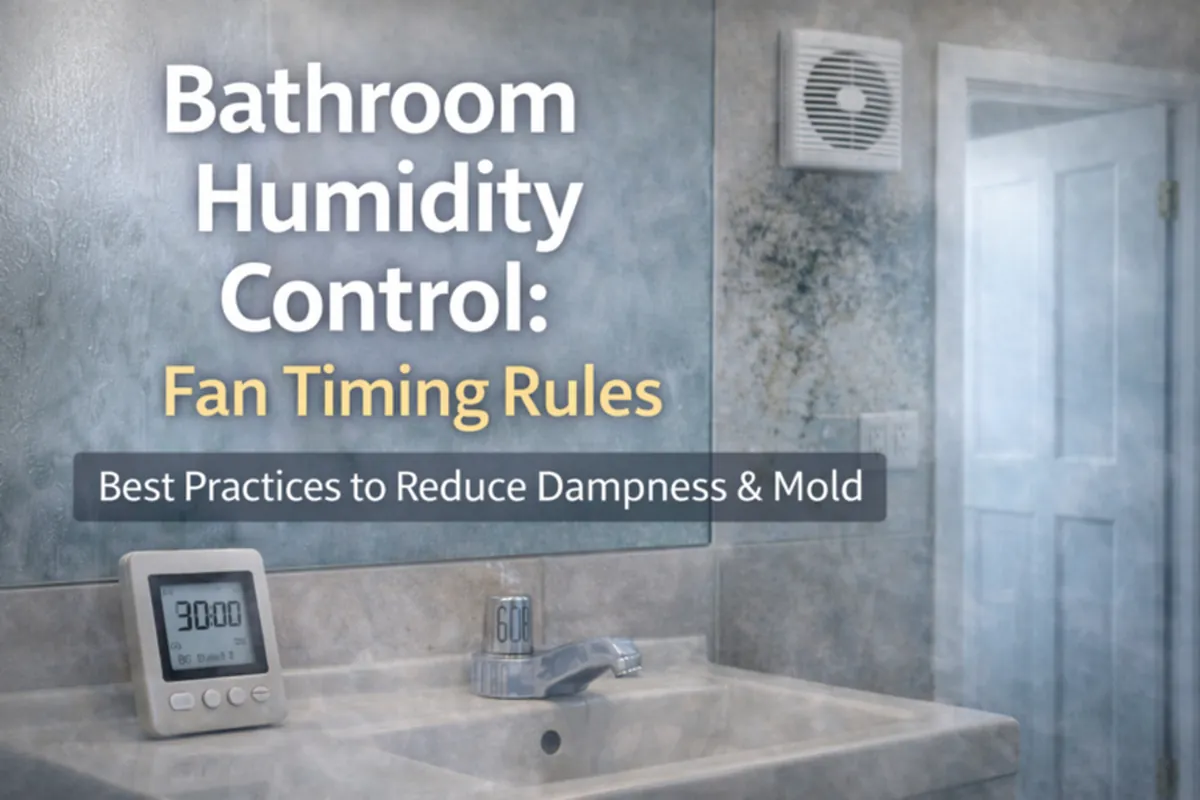
Bathroom humidity control prevents mould, peeling paint, and musty smells. Therefore, correct fan timing matters more than most homeowners assume.
Quick Snapshot for Bathroom Humidity Control
First, bathroom humidity usually spikes during showers and hot baths. Next, poor airflow traps moisture on cold walls and ceilings.
Also, weak fans or clogged ducts reduce ventilation even when running. Therefore, timing and maintenance must work together for lasting results.
Symptoms and What They Usually Mean
Condensation on mirrors means humidity stayed high after the shower ended. Damp ceilings usually mean steam condensed on cold, under-ventilated surfaces.
Mould in corners suggests surfaces stay wet for too long daily. Therefore, treat musty odours as trapped moisture in porous materials. Paint bubbling often means repeated wetting and slow drying cycles. Rusty fixtures usually mean humidity remains high for many hours.
Symptom table
|
Symptom |
Likely cause |
How to confirm |
First fix |
|---|---|---|---|
|
Foggy mirrors |
Fan off too soon |
Time fog after shower |
Run fan longer |
|
Damp ceiling corners |
Cold surfaces |
Appears in winter mornings |
Warm room, improve airflow |
|
Mould spots |
Persistent wetness |
Check corners weekly |
Clean, then fix humidity |
|
Musty odours |
Stagnant air |
Smell after closed night |
Increase air exchange |
|
Peeling paint |
Steam damage |
Look for bubbles |
Use bathroom paint |
Bathroom Humidity Control: Step-by-Step Diagnosis
First, take a five-minute hot shower with the door closed. Next, leave the room and wait ten minutes before checking surfaces.
Then, check mirrors, windows, and ceiling corners for fresh droplets. Also, feel two walls and note which one feels colder. However, inspect under the sink for dampness unrelated to showering. Therefore, rule out leaks before adjusting fan timing.
Finally, measure humidity with a hygrometer for three shower sessions.
A quick airflow check
First, hold a tissue near the fan grille while running. Next, confirm the tissue pulls upward and stays held.
If the pull is weak, airflow is likely restricted by dust. Therefore, cleaning the grille and duct becomes your first priority.
Causes Explained
Bathroom humidity control fails when moisture loads exceed ventilation capacity. Therefore, you must identify which cause dominates your bathroom.
Cause 1: Poor ventilation
Poor ventilation traps steam inside the bathroom after every shower. Therefore, moisture settles on paint, grout, and drywall surfaces.
This often happens with blocked ducts or long duct runs. Also, fans venting into attics can recycle humidity back indoors. As a result, humidity stays high even when the fan sounds loud. Therefore, confirm the fan actually exhausts outdoors.
Cause 2: Leaking water sources
Leaks add moisture continuously, even when nobody is showering. Therefore, humidity stays elevated and surfaces never fully dry.
Check for drips under sinks, toilet bases, and shutoff valves. Also, look for stains that grow without shower use. As a result, you can separate leaks from simple steam issues. Therefore, fix leaks before changing your fan schedule.
Cause 3: Inadequate fan capacity
A weak fan cannot clear steam from larger bathrooms quickly. Therefore, mirrors fog longer and walls feel damp after showering.
Fan sizing is often measured in airflow, usually CFM ratings. Also, long ducts and bends reduce effective airflow at the outlet. As a result, the fan performs worse than its box rating suggests. Therefore, timing alone may not solve persistent humidity in big rooms.
Cause 4: Incorrect fan usage timing
Many people switch the fan off immediately after showering ends. Therefore, humidity lingers and condenses while surfaces cool down.
Steam remains in the air after the water stops running. Also, wet tiles and towels keep releasing moisture for hours. As a result, the bathroom stays humid even with short showers. Therefore, fan run-time after showering is the main control lever.
Bathroom Humidity Control: Fan Timing Rules
First, run the fan during the entire shower, not only afterward. Next, keep the fan running for at least twenty minutes after you finish.
If mirrors stay foggy, extend the run time to thirty minutes. Therefore, use a timer switch to avoid forgetting or switching off early. Also, keep the bathroom warm, because warm surfaces reduce condensation.
If your bathroom has no window, add five extra minutes after each shower. In addition, keep the door slightly ajar when safe, so make-up air can enter. As a result, humid air moves toward the fan and leaves faster.
Timing guide by bathroom size
|
Bathroom size |
Suggested run-time after shower |
Notes |
|---|---|---|
|
Small |
15–20 minutes |
Add door gap for make-up air |
|
Medium |
20–30 minutes |
Use timer switch for consistency |
|
Large |
30–45 minutes |
Consider higher CFM or sensor fan |
Bathroom Humidity Control: Fixes and Prevention
Bathroom humidity control needs fast drying plus consistent ventilation habits. Therefore, use the fixes below in the order that matches symptoms.
Fix 1: Add a timer switch
First, install a timer switch to enforce consistent fan run-time. Next, set twenty minutes as your default after showering.
If mould was present, set thirty minutes for the first month. Therefore, surfaces dry faster and spores lose favourable conditions.
Fix 2: Clean the fan grille and check ducts
First, turn power off before cleaning any fan parts. Next, remove the grille and vacuum dust from blades carefully.
Then, check the exterior vent flap for blockage or stuck louvers. Also, confirm the duct is connected and not crushed. As a result, airflow improves without replacing the fan. Therefore, your timing adjustments become much more effective.
Fix 3: Improve make-up air
A fan cannot exhaust air unless new air enters the room. Therefore, a sealed door can reduce fan performance dramatically.
First, leave a small door gap after showering for five minutes. Next, open the bathroom door fully for a short burst ventilation. Also, open a nearby window briefly if weather allows. Therefore, humid air escapes faster and condensation drops.
Fix 4: Warm cold surfaces to reduce condensation
Condensation forms when surfaces are colder than humid air’s dew point. Therefore, warming the room reduces droplets even at similar humidity.
First, heat the bathroom for ten minutes before showering starts. Next, keep the door closed during heating to build warmth. Also, avoid pushing cabinets tight against exterior walls. Therefore, airflow can warm corners and prevent wet patches.
Fix 5: Control towels and rugs
Wet textiles release moisture for hours after showering ends. Therefore, they can keep humidity high even with a good fan.
First, hang towels spread out, not folded on hooks tightly. Next, move damp rugs to a warm room for drying. Also, wash and fully dry towels weekly to prevent odours. Therefore, the bathroom air becomes drier between showers.
Fix 6: Upgrade the fan when needed
Sometimes your fan is simply too weak for the space. Therefore, timing improvements still leave fog and damp corners.
First, check the fan’s airflow rating and compare it to room size. Next, consider a quieter higher-CFM model if noise discourages use. Also, consider a humidity-sensor fan for automatic control. Therefore, bathroom humidity control becomes consistent with less effort.
When to Call a Professional
First, call a professional if mould returns despite correct fan timing. Next, call if paint keeps bubbling after weeks of improved ventilation.
If you suspect a leak inside walls, call a plumber promptly. Therefore, you avoid rot, swelling, and hidden damage behind finishes.
If duct routing is complex, hire a contractor for proper venting. Also, call an electrician for wiring and safe fan upgrades. Therefore, repairs meet code and reduce risk.
Safety Warnings
First, switch off power before touching the fan housing or wiring. Therefore, you reduce shock risk near wet bathroom surfaces.
Next, treat mould carefully and avoid scraping large areas yourself. For example, wear gloves and a mask, and ventilate the room while cleaning. As a result, you reduce spore exposure and irritation risk.
Finally, stop using the bathroom if ceilings sag or stains grow quickly.
Common Mistakes
Many people run the fan only during the shower, then stop immediately. Therefore, moisture stays and condenses as surfaces cool afterward.
Others forget to clean fans, so airflow drops month by month. Also, some keep doors sealed, starving the fan of make-up air. As a result, the fan runs but removes little humidity.
Many repaint without fixing the humidity source first. Therefore, peeling and mould usually return within weeks again.
FAQ
What humidity level is ideal for a bathroom?
Aim for thirty to fifty percent when the room is idle. However, brief spikes during showers are normal.
How long should the fan run after a shower?
Start with twenty minutes and adjust based on mirror fog duration. Therefore, use thirty minutes if dampness persists.
Should I leave the fan on all day?
Usually no, unless humidity stays high for many hours. Therefore, a timer or sensor fan is a better solution.
How do I know the fan is working properly?
Check airflow at the grille and confirm outdoor vent airflow outside. Also, ensure the exterior flap opens during operation.
Conclusion
Bathroom humidity control depends on consistent fan timing and real airflow. Therefore, run the fan during showers and long enough afterward.
Next, clean ducts, improve make-up air, and warm cold surfaces. Finally, upgrade the fan or call professionals if problems persist.