
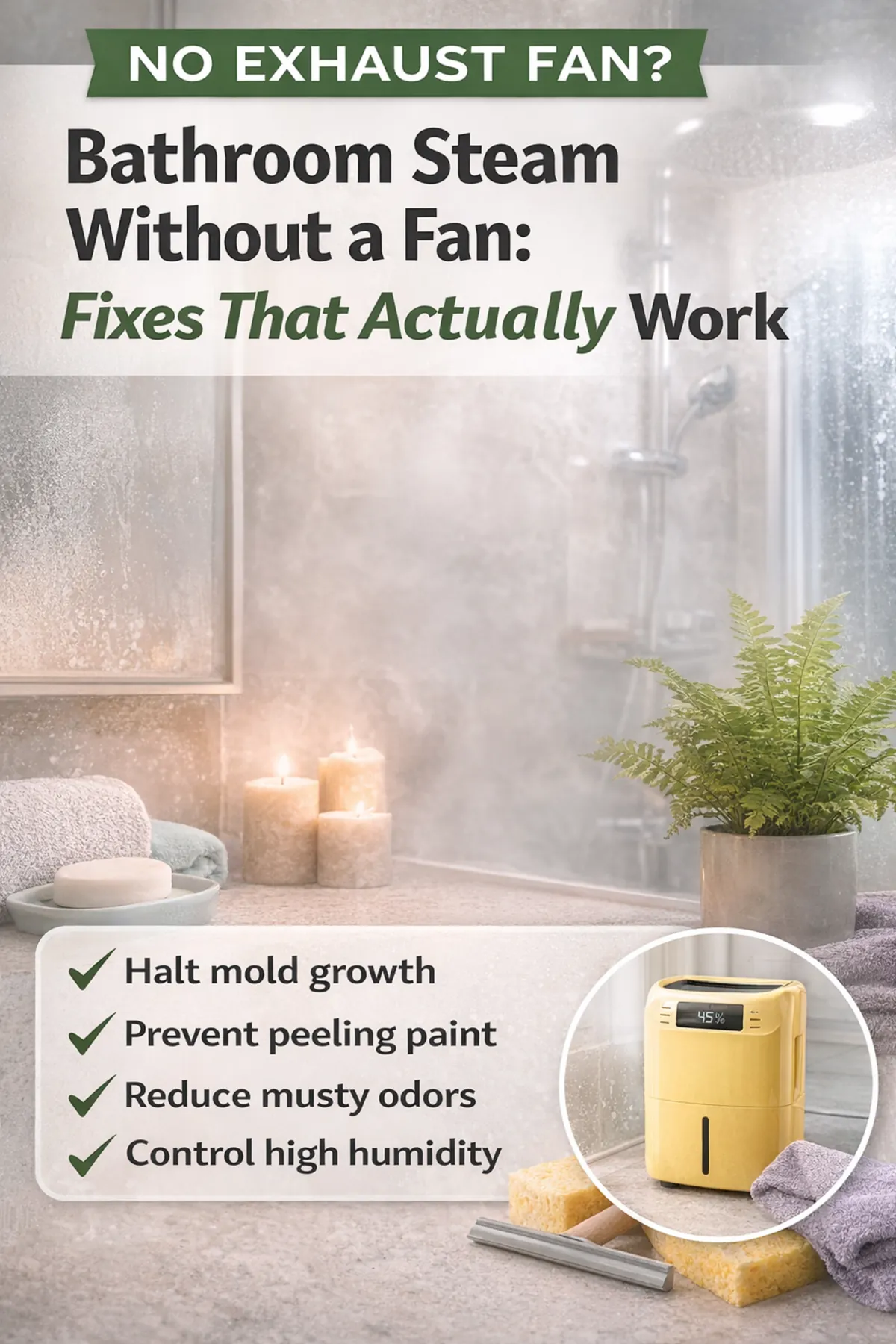
Bathroom steam without a fan can damage finishes and trigger mould growth. However, you can control bathroom steam using simple habits and tools.
Bathroom Steam Without a Fan: Quick Snapshot
First, bathroom steam rises fast during showers and settles on cold surfaces. Next, trapped humidity lingers longer when airflow is weak.
Also, damp towels and rugs keep feeding humidity for hours. Therefore, your goal is faster drying and better air exchange.
Bathroom Steam Without a Fan: Signs You Should Not Ignore
First, foggy mirrors that last long indicate high humidity after showers. Next, damp ceiling corners usually mean condensation on cold, poorly ventilated surfaces.
Also, musty odours suggest moisture remains trapped in grout and porous materials. In addition, peeling paint shows repeated wetting and slow drying over time. As a result, rusty screws and fixtures often appear where steam lingers daily.
Bathroom Steam Without a Fan: A Fast Diagnosis
First, take a five-minute hot shower with the door closed. Next, leave the room and wait ten minutes before checking surfaces.
Then, inspect mirrors, windows, and ceiling corners for fresh droplets. Also, feel two walls and compare which one feels colder. However, check under the sink for dampness unrelated to shower timing. Therefore, rule out leaks before blaming bathroom steam.
Finally, note how long fog and wetness remain after bathing ends.
A Simple Foil Test for Condensation
First, tape aluminium foil over a damp patch before bedtime tonight. Next, check both foil sides early the following morning.
If water is on the room side, condensation is most likely. However, water behind the foil suggests moisture is coming through. Therefore, repeat the test after one fix to confirm improvement.
Why Bathroom Steam Builds Up Without a Fan
First, bathroom steam problems come from humidity, airflow, and cold surfaces. Therefore, fixes must target the cause, not cosmetic damage.
Also, multiple causes often overlap in small bathrooms with poor heating. As a result, you may need two changes, not one.
Cause 1: High Humidity From Showers and Baths
First, hot water releases vapour quickly in a small enclosed bathroom. As a result, humidity can rise above sixty percent within minutes.
Also, long showers increase moisture load far more than most people expect. Therefore, shorter showers reduce steam faster than any product.
Cause 2: Poor Ventilation Traps Bathroom Steam
First, without a fan, steam must escape through windows and door gaps. However, many bathrooms have sealed doors and tiny windows.
As a result, moist air clings to walls, ceilings, and fixtures for hours. Therefore, dampness can persist long after the shower ends.
Cause 3: Cold Walls Turn Steam Into Condensation
First, warm moist air condenses when it touches cold walls or ceilings. Therefore, corners and window surrounds often show dampness first.
Also, poor insulation creates cold spots that attract droplets after every shower. However, wardrobes and cabinets block airflow and keep surfaces colder longer. As a result, mould starts where drying is always slow.
Cause 4: Inadequate Heating Slows Drying
First, cold bathrooms dry slowly because surfaces stay below the dew point. As a result, steam becomes droplets instead of leaving as vapour.
Also, weak heat keeps towels damp, which adds humidity back into air. Therefore, heating level affects bathroom steam more than most homeowners realise.
Bathroom Steam Without a Fan: Fixes That Work
First, choose fixes that remove moisture quickly and keep surfaces warmer. Next, combine airflow and drying habits for consistent long-term results.
Also, avoid repainting or sealing until the bathroom stays dry for days. Therefore, you prevent trapped moisture and repeated peeling later.
Fix 1: Use Burst Ventilation Instead of Cracked Windows
First, open the window fully for three to five minutes. Next, close it and keep heating steady to protect surfaces.
This swaps humid air quickly without chilling walls for hours. Therefore, it works better than leaving a small crack all day.
If there is no window, use the door for burst airflow.
Fix 2: Use the Door to Release Bathroom Steam
First, a sealed door traps steam like a greenhouse after showers. Therefore, create a controlled gap for air exchange quickly.
Next, open the door wide for five minutes after showering ends. Also, keep a towel at the threshold to stop puddle spread. Finally, close the door again after the air clears.
Fix 3: Dry Surfaces Before Mould Starts
First, mould needs moisture to stay on surfaces for long periods. Therefore, fast wiping breaks the cycle even without a fan.
Next, keep a squeegee in the shower and wipe tiles quickly. Also, wipe mirrors and window sills using microfiber cloths. As a result, moisture leaves surfaces before it can feed mildew.
Finally, hang cloths outside the bathroom to dry completely.
Fix 4: Use a Portable Fan the Correct Way
First, a portable fan speeds drying, but it cannot remove moisture alone. Therefore, always aim airflow toward an exit, not a wall.
Next, place the fan facing an open window and blow outward. Also, run it for twenty minutes after showering ends. However, if no window exists, aim the fan toward the door. Therefore, keep nearby rooms warm to avoid new condensation.
Fix 5: Use a Dehumidifier for Bathroom Steam Control
First, a dehumidifier removes water by collecting it into a tank. Therefore, it is the best long-term alternative to a fan.
Next, set a target between forty-five and fifty-five percent humidity. Also, close the bathroom door while the unit runs. As a result, it controls one space faster and more efficiently.
Finally, run it for thirty to sixty minutes after showers finish.
Fix 6: Stop Towels and Rugs From Feeding Humidity
First, wet textiles release moisture for hours after showering ends. Therefore, towels and rugs can keep steam conditions alive.
Next, hang towels spread out, not folded tightly on hooks. Also, move damp rugs to a warmer room for drying. Finally, wash towels weekly and dry them fully before reuse.
Fix 7: Choose Finishes That Survive Bathroom Steam
First, paint fails when steam wets it repeatedly over months and years. Therefore, choose moisture-resistant products for walls and ceilings.
Next, use mould-resistant primer on ceilings and corner hotspots. Also, apply bathroom-grade paint with scrub-resistant protection. However, coatings never replace airflow and humidity control in practice. Therefore, combine repainting with ventilation and fast drying routines.
Bathroom Steam Without a Fan: Prevention Checklist
First, do burst ventilation after every shower, even in winter. Next, wipe wet surfaces quickly, especially glass and tile edges.
Also, keep the bathroom warm during showers to reduce condensation risk. Therefore, surfaces stay above dew point more often.
In addition, track humidity peaks for one week using a hygrometer. As a result, you will see which fixes reduce steam fastest.
Finally, repeat the same routine daily until mirrors clear quickly.
When to Call a Professional
First, call a professional if mould keeps returning after consistent drying. Next, call if paint peels repeatedly despite routine ventilation changes.
Also, contact a plumber if dampness persists without showers or humidity spikes. Therefore, you can rule out hidden leaks behind tiles and drywall. Finally, ask an insulation specialist about cold bridges during planned renovations.
Safety Warnings
First, turn off power before working near outlets or light fixtures. Therefore, never use heaters near wet floors or dripping surfaces.
Also, seek help if mould covers more than one square metre. Finally, treat sagging ceilings as urgent, because hidden water can collapse.
Conclusion
First, bathroom steam without a fan is manageable with airflow and fast drying. Therefore, use burst ventilation, wiping, and humidity control after showers.
Next, keep surfaces warmer with steady heating and fewer cold spots. Finally, call professionals early when moisture persists or damage worsens.