
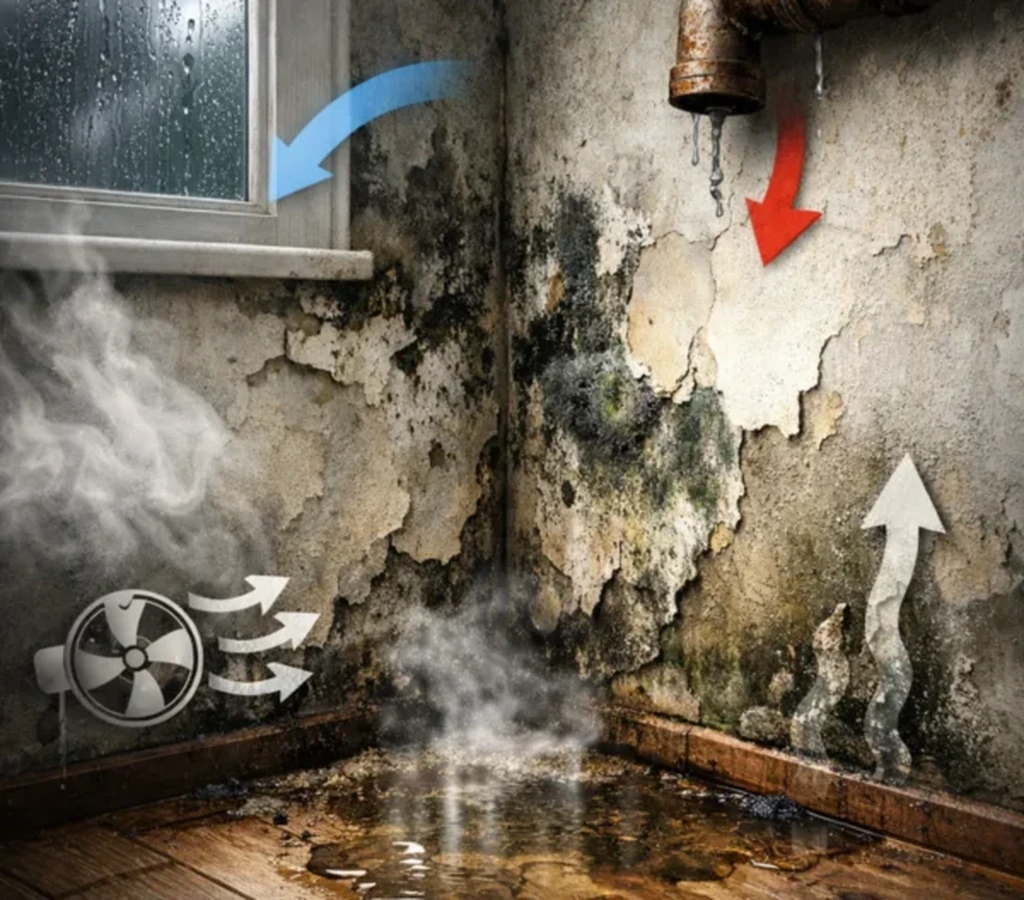
Cold walls and humid air cause condensation when warm indoor moisture meets a surface that is colder than the surrounding air. This is one of the most common reasons for damp corners, wet window reveals, peeling paint, and black mould in homes. The pattern may look random at first, but the mechanism is usually predictable. If you understand where the cold surface is, where the moisture comes from, and when the water appears, you can diagnose the problem much more accurately and choose the correct fix.
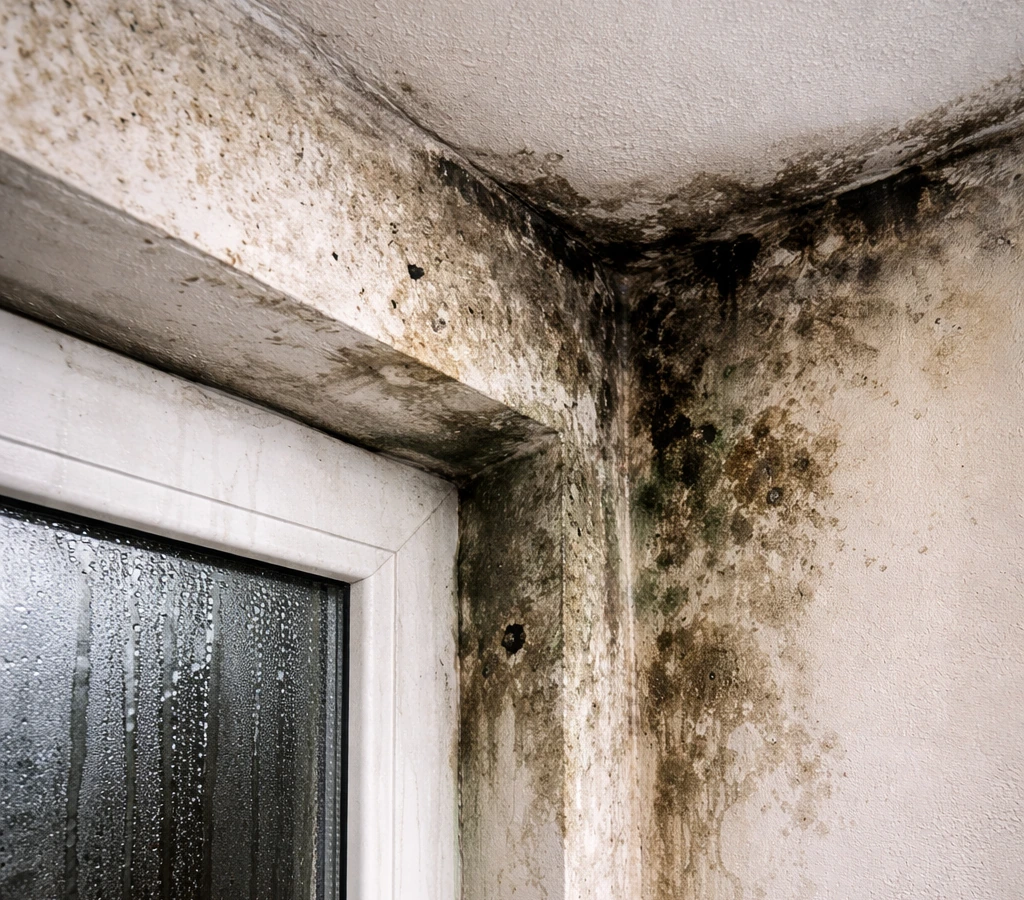
Air inside a home always contains some water vapour. Cooking, showering, breathing, and everyday living gradually add moisture to each room. Warm air can hold more moisture than cold air, so indoor humidity may seem harmless until that warm air reaches a colder surface.
When cold walls and humid air meet, the air cools at the surface. If the surface temperature is low enough, the air reaches dew point and water vapour changes into liquid water. That moisture then settles on plaster, paint, glass, timber, silicone, or grout. If this cycle repeats often, the surface stays damp for long enough to support mould growth.
This is why condensation is usually not just a humidity issue and not just a cold-wall issue. The visible damage appears when both conditions overlap often enough. A room can have moderate humidity and still suffer if one wall or corner stays much colder than the rest.
Where Cold Walls and Humid Air Usually Meet First
Condensation does not usually form evenly across the whole room. It appears first on the coldest available surfaces. Common problem areas include window glass, window reveals, external corners, wall sections behind wardrobes, the tops of exterior walls, and areas near poorly insulated lintels or concrete junctions.
Older solid-wall homes often suffer more because they lose heat faster through the external envelope. However, modern homes can also develop local cold spots around structural junctions, weak insulation zones, floor edges, and badly sealed openings. Furniture placed tightly against an external wall also blocks air circulation, so that wall surface stays colder and dries more slowly.
That is why mould often starts behind furniture or in corners before it appears on open wall surfaces. The room may feel warm overall, but the local surface temperature in those hidden areas can still be low enough for regular condensation.
How to Diagnose Cold Walls and Humid Air Problems
The best starting point is a simple digital hygrometer and a careful check of the room. In most homes, indoor relative humidity should usually stay around 40 to 55 percent. If it remains above 60 percent for long periods, condensation risk rises sharply on colder surfaces.
Check the room early in the morning, before heating and sunlight change the surface conditions. Touch external walls, corners, and reveals. Cold surfaces are often obvious by hand when compared with internal partition walls. Then look for repeated signs such as water on windows, damp paint, peeling wallpaper, black spotting, or a stale smell in areas with poor airflow.
Timing is also important. If water appears overnight and is mostly gone by late morning, the cause is often cold walls and humid air meeting during the coolest part of the day. If a patch stays wet all day, keeps spreading, or worsens after rain, you should also consider a leak or another building defect. For comparison with a specific household moisture source, see our guide on drying clothes indoors without causing damp and mould.
Cold Walls and Humid Air or a Hidden Leak
This distinction matters because condensation and leaks require very different repairs. Surface condensation usually affects colder parts of the room, appears during colder weather, and gets worse after nights with high indoor humidity. It often shows on corners, reveals, glass, and lightly insulated parts of the envelope.
A hidden leak behaves differently. Moisture from plumbing or external ingress often creates a more persistent patch. It may stay wet longer, spread in a more irregular way, stain deeper into plaster, or appear after rainfall or water use rather than after overnight cooling.
A simple foil test can help as an initial check. Tape a square of kitchen foil tightly over the suspicious patch and leave it in place for about 24 hours. If moisture forms on the room side of the foil, that usually points to surface condensation from humid indoor air. If the dampness appears behind the foil, moisture may be moving from within the wall or substrate instead.
Symptoms of Condensation and What They Usually Mean
| Symptom | Most likely explanation | What to check first | Best first action |
|---|---|---|---|
| Water on windows in the morning | Humid indoor air meeting cold glass overnight | Humidity level and bedroom ventilation | Ventilate in the morning and reduce overnight moisture |
| Black mould in external corners | Repeated condensation on a cold surface with weak airflow | Surface temperature and furniture position | Improve airflow and lower humidity |
| Peeling paint near a cold wall | Long-term surface moisture from condensation | Humidity pattern and wall temperature | Fix the moisture cause before redecorating |
| Damp behind wardrobes or cabinets | Cold wall plus blocked air circulation | Gap behind furniture and wall temperature | Move furniture away from the wall |
| Patch that stays wet all day | Possible leak or penetrating damp, not only condensation | Rain pattern, plumbing route, foil test | Investigate the moisture source first |
Main Causes Behind Cold Walls and Humid Air
Poor ventilation is one of the main causes of high indoor humidity. Moisture generated indoors stays trapped when windows remain closed, extractor fans are weak, or vents are blocked. This raises the moisture load that later condenses on colder surfaces.
Low surface temperature is the other half of the problem. External walls may stay cold because of weak insulation, solid wall construction, thermal bridges, wet masonry, failed render, or external defects that cool the wall from outside. Even a room with moderate humidity can still develop condensation if one part of the envelope is much colder than the rest.
Airflow matters as well. Curtains, wardrobes, beds, sofas, and stored items placed tightly against outside walls create stagnant zones. These areas warm more slowly, dry more slowly, and become common mould locations. In practice, many homes suffer because humidity, cold surfaces, and poor circulation all combine in the same room.
How to Fix Cold Walls and Humid Air Step by Step
Start with the lowest-cost changes first. Measure indoor humidity, ventilate more effectively, and improve extraction in bathrooms and kitchens. Short, full ventilation is usually more effective than leaving a small window crack open for many hours. If indoor humidity still stays high, use a dehumidifier to bring the room back toward 40 to 55 percent.
Next, improve local airflow around cold surfaces. Pull wardrobes, beds, and sofas away from external walls. Keep curtains from trapping moisture against cold reveals and window corners. Avoid blocking vents. These simple adjustments often reduce mould risk quickly when the issue is surface condensation rather than water ingress.
If the same cold areas continue to attract moisture, the low surface temperature itself must be addressed. That may involve improving insulation, correcting a thermal bridge, repairing failed render, fixing gutters, or sealing external defects. If you want more practical home diagnosis material around similar issues, you can also browse Home Issue Guide for related articles and household troubleshooting guides.
When Surface Temperature Needs a Building Fix
Some homes continue to suffer even after humidity has been lowered and ventilation has improved. In those cases, the surface may simply remain too cold. Typical building-level causes include uninsulated solid walls, exposed lintels, concrete floor junctions, weak loft-edge insulation, and thermal bridges around structural elements.
External defects can also contribute. Leaking gutters, cracked render, failed pointing, and persistently wet masonry reduce wall temperature and can mimic or intensify condensation problems. When that happens, the fix is not only inside the room. The building envelope must also be inspected and repaired where necessary.
For broader Romanian-language guidance on home moisture and indoor problems, see Probleme Acasă. For additional English-language practical home repair content, visit Home Fix Answers.
What Not to Do
Do not paint over mould before changing the moisture conditions that caused it. The stain may disappear for a short time, but the growth usually returns because the surface still becomes damp. Do not assume every wet patch is condensation either. A persistent damp area can point to a leak, rain ingress, or a defect within the wall.
Do not block vents to reduce draughts if the home already has high indoor humidity. That often worsens condensation inside the room and may trap moisture inside cavities or floor voids. Do not push large furniture tightly against cold external walls when mould has already appeared there.
When to Call a Professional
You should consider professional assessment if mould returns quickly after correct cleaning and humidity control, if plaster feels soft over a wide area, or if the moisture pattern does not match normal overnight condensation. A specialist is also useful when you suspect a thermal bridge, an external defect, or a hidden leak but cannot confirm the source confidently.
Thermal imaging, moisture meters, and building-envelope inspection can help separate cold walls and humid air from penetrating damp, rain ingress, or plumbing failure. For technical background on moisture behaviour in buildings, see the Building Research Establishment and the NHS guidance on mould and damp.
FAQ
What do cold walls and humid air do inside a home?
They create condensation when moist indoor air cools on a cold surface. If this happens often, it can lead to damp patches, mould, peeling paint, and stale odours.
What humidity level increases condensation risk?
Risk rises when indoor humidity stays above 60 percent for long periods, especially during colder weather and overnight. Most homes perform better around 40 to 55 percent.
Can cold walls and humid air be solved without major renovation?
Sometimes yes. Better ventilation, stronger extraction, lower humidity, and improved airflow around furniture can solve many surface condensation problems. More persistent cases may need insulation work or external building repairs.
How can I tell condensation from a leak?
Condensation usually appears on cold surfaces and often follows overnight cooling or high indoor humidity. A leak often creates a more persistent or irregular wet patch that does not follow the same daily pattern.
Why does mould often grow behind furniture?
That area tends to have colder surfaces and poorer airflow. When humid indoor air cannot circulate properly, the wall stays damp for longer and mould gets the right conditions to grow.
Three Practical Steps That Solve Many Cases
- Keep indoor humidity under control with ventilation, extraction, and dehumidification where needed.
- Improve airflow around cold external walls, corners, and large furniture.
- Investigate persistent cold surfaces and building defects if condensation keeps returning in the same spots.