
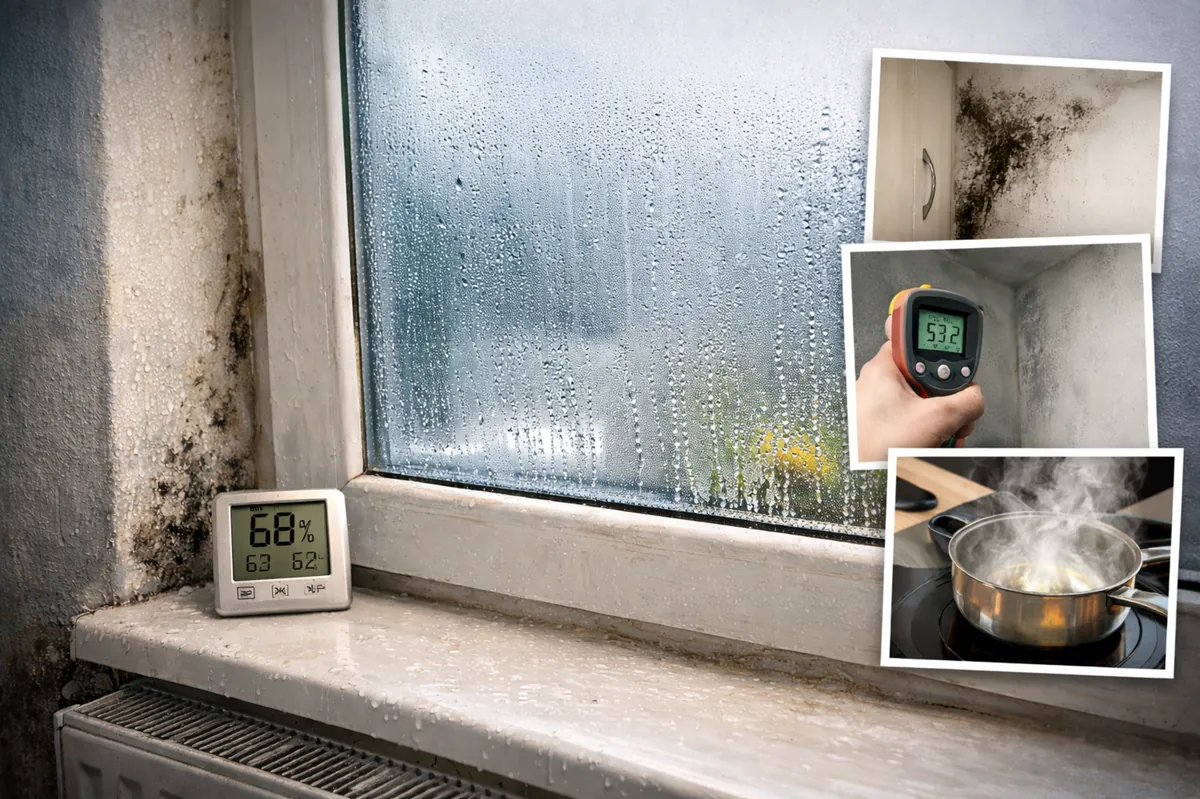
Dew point home issues happen when warm indoor air hits cold surfaces. However, many homeowners notice damp patches before they know the cause.
Why dew point home problems happen
Warm air can hold more moisture than cool air. Therefore, water stays invisible until air touches a colder surface. When that surface reaches the dew point, moisture forms. In many cases, windows and outside walls show it first.
This often happens during winter and wet weather. Additionally, showers, cooking, and drying clothes raise indoor moisture quickly. If walls stay cold, condensation appears much sooner. As a result, the room can feel clammy and stale.
Warning signs
The first sign is often a damp smell indoors. However, smell alone does not confirm the exact problem. You may also see water on windows each morning. That usually suggests humid air meeting cold glass.
Cold patches on walls are another warning sign. Furthermore, paint may blister near corners or ceilings. Wallpaper edges can lift after repeated moisture exposure. In contrast, a plumbing leak often creates one fixed wet area.
Small black mold spots may also appear. For example, they often grow behind wardrobes or thick curtains. Those places stay colder and hold still air longer. Consequently, moisture stays there long enough for mold growth.
Main causes
Most homes have more than one contributing cause. However, cold surfaces and moist air create the main problem. Weak insulation, thermal bridging, and older glazing lower surface temperatures. Because of this, condensation starts sooner than expected.
Daily habits can also raise indoor humidity quickly. For example, showers, boiling pans, and indoor laundry release large amounts. Even breathing overnight adds noticeable moisture in small bedrooms. As a result, some rooms feel damp by morning.
Poor airflow makes the problem worse over time. Additionally, large furniture against outside walls traps colder air. That space warms slowly and dries slowly. In many cases, mold starts there before windows even mist up.
Heating patterns also matter inside the home. If rooms cool down all day, surfaces stay colder. Then evening moisture hits those colder materials first. Therefore, intermittent heating often increases condensation risk.
How to confirm the cause
Start by watching when moisture appears each day. First, note which rooms feel dampest and when. Next, compare mornings, evenings, and times after showers. Patterns often reveal whether humidity is the main trigger.
Use a small hygrometer to check humidity levels indoors. However, humidity numbers matter more when paired with room temperature. A moderate reading can still cause condensation on very cold walls. That is why cold surfaces need checking too.
Touch different walls and compare their temperatures carefully. For example, an outside wall usually feels colder than an internal wall. Corners, window reveals, and ceiling edges deserve extra attention. Moreover, these areas often show the first damp marks.
A simple infrared thermometer makes checks more accurate. It helps identify surfaces that are much colder than others. Therefore, you can spot likely condensation areas very quickly. [internal link: how to check indoor humidity levels]
First steps to take
Reduce indoor moisture before trying larger building changes. First, use extractor fans during cooking and showers. Next, keep lids on pans and dry clothes carefully. Small changes often improve conditions within several days.
Keep rooms gently heated during colder periods. However, avoid heating one room strongly while others stay cold. Steady background warmth keeps wall surfaces less vulnerable. As a result, moisture has fewer cold places to settle.
Move large furniture away from outside walls slightly. Additionally, open curtains during the day to warm glass. This improves air movement around colder surfaces. In many cases, hidden damp patches begin drying faster.
A dehumidifier can also help in problem rooms. For example, it works well during winter or wet spells. It does not solve every cause, but it lowers moisture quickly. [internal link: where to place a dehumidifier at home]
When to call a professional
Call a professional if damp marks keep returning. However, choose someone who checks ventilation and insulation too. Repeated mold after cleaning usually means the cause remains. That needs proper measurement rather than guesswork.
You should also get help for larger cold patches. Additionally, seek advice if walls remain damp during mild weather. That may point to leaks, insulation gaps, or another issue. In contrast, simple window condensation is usually less serious.
Get help sooner if health symptoms are involved. For example, asthma and allergies can worsen in damp rooms. Strong mold growth also needs careful treatment. Therefore, do not ignore a problem that keeps spreading.
Prevention tips for dew point home issues
Prevention works best when moisture and temperature stay balanced. Therefore, aim for steady routines instead of occasional big changes. Ventilation should match your daily moisture production. Heating should keep cold surfaces above risk levels.
Morning routines can make a big difference. First, wipe heavy window moisture before it runs down. Next, open or run extraction after bathing and cooking. That removes water before it settles on colder materials.
Furniture layout also affects condensation risk indoors. Moreover, packed corners and thick curtains block warmer air movement. Leave small gaps behind wardrobes on outside walls. In many cases, that reduces mold return significantly.
Insulation upgrades may be needed in stubborn cases. For example, loft insulation, glazing upgrades, or reveal insulation can help. The main benefit is warmer indoor surface temperatures. Consequently, dew point home problems become much less frequent.
Symptoms table
This table helps compare common signs around the home. However, use it as a guide rather than a final diagnosis.
| Symptom | Likely Cause | How to Confirm | First Action |
|---|---|---|---|
| Water on bedroom windows | Humid overnight air on cold glass | Check if it dries by afternoon | Ventilate and keep gentle heat |
| Black mold behind wardrobe | Cold wall with poor airflow | Pull furniture forward and inspect | Create a gap and clean safely |
| Damp wall corner | Thermal bridge or weak insulation | Compare surface temperature nearby | Improve airflow and monitor humidity |
| Peeling wallpaper | Repeated condensation on cold wall | Note changes after showers or cooking | Reduce moisture and warm room |
| Musty smell in spare room | Cool room with trapped humid air | Compare humidity with other rooms | Add background heat and airflow |
Tools and materials
A few simple items can help you investigate safely. Additionally, they make it easier to track patterns before bigger repairs.
| Tool or Material | Purpose | Approximate Cost |
|---|---|---|
| Hygrometer | Checks indoor humidity and temperature | Low |
| Infrared thermometer | Finds colder wall surfaces | Low to moderate |
| Microfiber cloths | Wipes moisture from windows and sills | Low |
| Mold cleaner | Removes light surface mold | Low |
| Dehumidifier | Lowers indoor moisture levels | Moderate to high |
Frequently asked questions about dew point home
This dew point home section answers the questions homeowners ask most often. However, the best results come from checking both indoor moisture and surface temperature.
Is condensation always caused by poor insulation?
No, condensation is not always caused by poor insulation alone. However, poor insulation makes inside surfaces colder, so moisture forms faster. Daily activities also add large amounts of water vapor indoors. For example, cooking, showering, and drying laundry can raise humidity quickly.
Why do only certain walls feel damp in a dew point home?
Some walls lose heat faster than others during colder weather. Additionally, outside walls, corners, and window reveals often stay much colder. Furniture placed tightly against those walls also blocks airflow. As a result, dampness appears in isolated spots instead of across the whole room.
Can opening windows solve the problem completely?
Opening windows can help remove humid air after showers or cooking. However, it rarely solves the whole problem when walls stay cold. Short bursts of ventilation lower moisture for a while. Therefore, steady heating and better insulation may still be needed.
Does a dehumidifier fix dew point home problems?
A dehumidifier can lower indoor moisture levels quite effectively. In many cases, that reduces window condensation within a few days. However, it does not warm cold walls or fix thermal bridges. Because of this, damp patches may still return in the same colder areas. A dehumidifier works best as part of a wider solution.
How do I know it is not a leak in a dew point home?
Condensation usually follows a daily pattern linked to room use. For example, it often worsens overnight, after showers, or during cooking. Leak damage often stays wet for longer and looks more fixed. Additionally, leaks may cause staining even during warmer, drier days.
Dew point home problems usually happen when humid air meets colder indoor surfaces. However, the lasting fix comes from reducing moisture and warming vulnerable areas.
Start by checking humidity levels in the busiest rooms each day. Next, compare colder outside walls with warmer internal walls. Then improve extraction, airflow, and steady background heating throughout the home. If the same patches keep returning, inspect insulation gaps and hidden thermal bridges.