
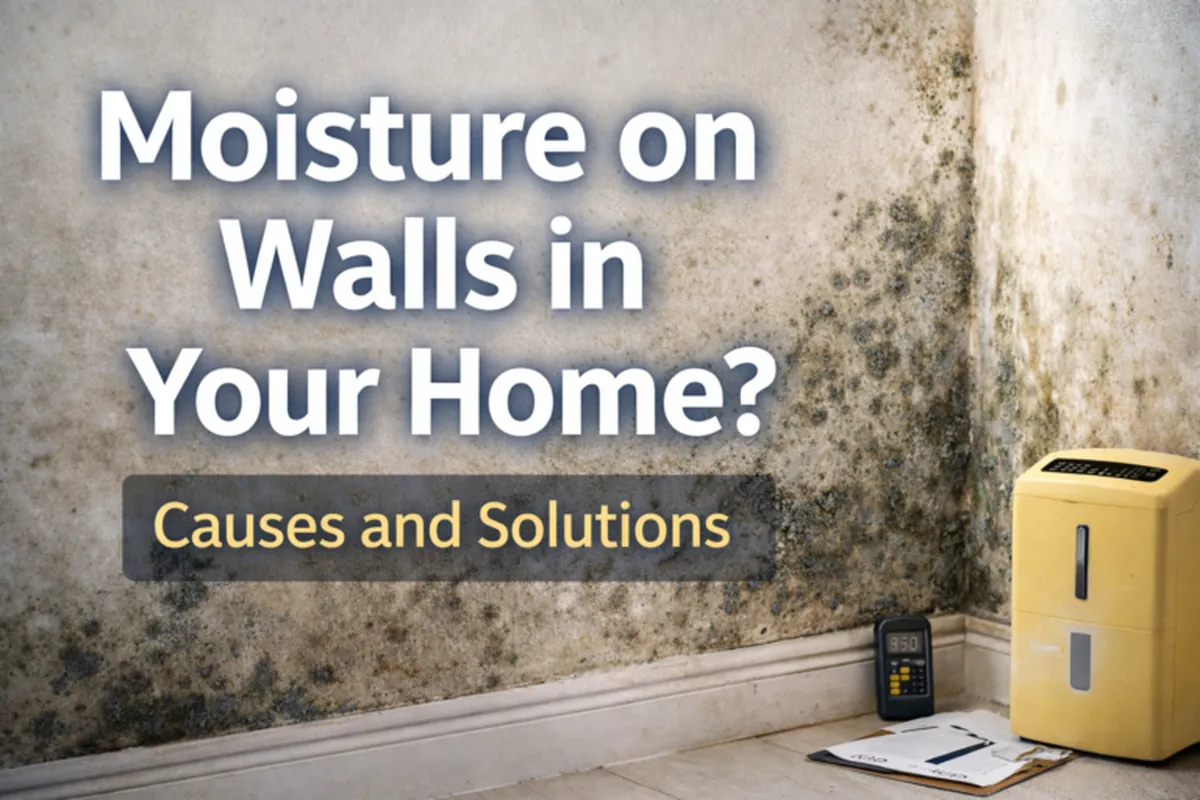
Moisture on walls worries many homeowners, because it signals hidden water problems. Therefore, you should investigate early, before mould or structural damage begins.
Identifying Moisture on Walls
Moisture on walls often appears after storms, cold nights, or humid days. You may notice stains, peeling paint, bubbling plaster, or damp wallpaper seams. In addition, baseboards can swell, and trim may warp near wet areas. As a result, rooms can smell musty, especially in mornings.
Moisture may look like water spots, fine mildew specks, or window-edge condensation. Therefore, check the wall surface with your hand for cool dampness.
Where moisture usually shows first
Bathrooms often show moisture near corners, ceilings, and grout lines. Kitchens often show moisture near hoods, sinks, and exterior walls. Meanwhile, bedrooms may show moisture behind wardrobes on cold outside walls. Basements may show low damp bands and white powdery residue.
Moisture on Walls: Fast Diagnosis by Timing and Location
First, note when dampness appears, because timing reveals the most likely source. Next, compare dampness with showers, cooking, laundry, and rainfall events.
If dampness rises after showers, ventilation is usually the main issue. However, if dampness rises after storms, exterior intrusion becomes more likely. If dampness forms only on cold mornings, condensation is a strong suspect. Therefore, record temperature changes and heating patterns across two or three days.
A quick foil test for condensation
First, tape a square of foil over the damp patch overnight. Next, check both foil sides early the next morning.
If water is on the room side, condensation from indoor air is likely. However, if water is behind the foil, moisture inside walls is likely. Therefore, repeat the test after one change, like ventilation improvements.
Understanding the Root Causes
Moisture on walls comes from indoor humidity, liquid leaks, rain intrusion, or ground seepage. Therefore, you must match the fix to the cause, not the stain.
Two causes can overlap, especially in older homes with weak insulation. In addition, one problem can hide another, like leaks plus poor airflow. As a result, good notes and photos prevent expensive guesswork later. So, check causes one by one, and document results carefully.
Cause 1: Poor Ventilation and Trapped Humidity
Bathrooms and kitchens release water vapour during showers, boiling, and dishwashing. However, vapour needs an outdoor exit route through proper extraction.
When airflow is weak, humidity lingers near cooler wall surfaces and corners. As a result, moisture forms on paint, grout, and drywall paper. Therefore, run fans during use, and for twenty minutes afterward. Also, check that fans vent outdoors, not into attic spaces.
Drying laundry indoors can raise humidity sharply in small rooms. Therefore, move drying racks to ventilated spaces, or use a dehumidifier.
Cause 2: Condensation on Cold Walls
Condensation forms when warm moist air touches cold wall surfaces indoors. Therefore, droplets can appear without any plumbing leak at all.
This is common during winter heating and sudden outdoor temperature drops. Also, it happens behind wardrobes that block airflow along exterior walls. High humidity raises the risk, because dew point occurs sooner indoors. However, poor insulation keeps surfaces colder than expected during cold snaps.
Exterior corners and window reveals usually show dampness first. Therefore, look for morning wetness that fades as rooms warm.
Cause 3: Plumbing Leaks Inside Walls
A hidden plumbing leak can soak drywall from the inside out quietly. However, early damage may look small, dull, or slightly discoloured.
Over time, paint blisters, stains spread, and damp rings form around patches. As a result, you may smell mustiness near the affected area. Leaks often start at supply lines, drains, valves, or loose fittings. Therefore, patches may worsen after showers, dishwashing, or toilet flushing.
Slow drain leaks can wet framing for weeks without visible puddles. In addition, pinholes can spray intermittently and leave scattered spotting.
Simple leak checks you can do
First, watch the water meter with all fixtures turned off. Next, check whether the meter still moves over ten minutes.
Also, inspect cabinets, shutoff valves, and toilet bases for dampness signs. Finally, listen for dripping at night when the home is quiet.
Cause 4: Roof, Siding, or Window Water Intrusion
Rainwater can enter through damaged roofing, siding seams, or window seals. Therefore, wet walls often appear after storms or wind-driven rain.
Water can travel along studs and show far from the entry point. In addition, stains may appear near ceilings, window edges, or upper corners. Cracked caulk and failed flashing are common entry routes outside. However, missing shingles can push water into wall cavities quickly.
Overflowing gutters can soak fascia and trim repeatedly during heavy rainfall. As a result, water finds gaps and travels inward behind finishes.
Cause 5: Rising Damp and Basement Seepage
Rising damp occurs when groundwater wicks upward through porous masonry materials. Therefore, it mainly affects basements and ground-floor walls in older homes.
You may see damp bands low on the wall and flaking plaster. In addition, white powdery salts can appear as surfaces dry repeatedly. Poor drainage outside keeps soil saturated near foundation walls for longer. However, missing barriers can also allow ongoing moisture movement inside.
Paint often blisters and peels near floor lines again and again. Therefore, cosmetic repainting fails until ground moisture is reduced.
Immediate Steps to Dry the Wall Safely
First, reduce room humidity quickly using extraction fans or brief ventilation. Next, start a dehumidifier and aim near fifty percent humidity.
Then, move furniture away from the wall to restore airflow. Also, blot visible water and remove wet rugs from nearby floors. However, avoid intense heat on one spot, because plaster can crack. Therefore, aim a fan along the wall for even, gentle drying.
Solutions and Fixes That Match the Cause
First, fix the moisture source before patching, sealing, or repainting surfaces. Therefore, you avoid trapping water behind paint, wallpaper, or plaster.
Use the sections below to match actions to your diagnosis results. In addition, keep notes and photos, because progress should be measurable. As a result, you will avoid repeated repairs that fail after weeks. So, choose the most likely cause, and test one change at a time.
DIY solutions for ventilation and condensation
First, run bathroom and kitchen fans during use and twenty minutes after. Next, cover boiling pots and vent cooking steam outdoors when possible.
Also, open windows fully for five minutes, not tiny cracks for hours. Therefore, you swap humid air quickly without chilling wall surfaces. Leave five to ten centimetres behind wardrobes on exterior walls. In addition, keep curtains from trapping cold air near windows.
If humidity stays high, use a dehumidifier during wet seasons. However, keep doors closed, so the unit controls one room effectively.
Fixes for plumbing leaks and hidden water
First, shut off water if you find an active leak source. Next, repair fittings, valves, or pipe sections as soon as possible.
Then, dry the wall cavity using airflow after the leak is fixed. Also, replace wet insulation, because it holds moisture for weeks.
If you need a test opening, cut small and avoid wiring zones. Therefore, patch only after the wall stays dry for several days.
Fixes for rain intrusion
First, clean gutters and repair sags that cause overflow during storms. Next, extend downspouts away from foundations and splash zones.
Also, reseal window joints and replace failed caulk where gaps appear. Therefore, water cannot track behind frames and trim during wind-driven rain. Repair flashing at windows, roof edges, and wall penetrations like vents. Finally, replace damaged shingles or siding sections to stop repeat entry.
Fixes for rising damp and basement seepage
First, improve exterior drainage so water cannot pool near foundations. Next, slope soil away and clear blocked downspouts before wet seasons.
Also, keep storage off basement walls, allowing airflow and faster drying. In addition, use a dehumidifier during humid months and after storms. However, persistent rising damp may require professional waterproofing assessment. Therefore, avoid sealing damp masonry with impermeable paint too early.
Preventing Moisture on Walls Long Term
First, prevention works best when you control humidity and water entry paths. Therefore, combine indoor habits with outdoor maintenance for reliable results.
Next, check your home after storms and seasonal temperature shifts each year. As a result, small fixes prevent expensive repairs and repeated mould risk. Also, keep airflow moving along exterior walls and behind large furniture. However, avoid pushing wardrobes tight to cold walls during winter months.
Simple prevention checklist
First, run extraction fans during showers and cooking, then twenty minutes. Next, keep indoor humidity below fifty percent when possible.
Also, clean gutters and check downspouts twice each year. In addition, seal gaps around windows, vents, and pipe penetrations outside. Finally, keep furniture a few inches away from cold exterior walls.
When to Call an Expert
First, call a professional if you cannot identify the moisture source confidently. Therefore, seek help when dampness returns quickly after basic fixes.
Next, call if walls feel soft, crumbly, or unstable when pressed. Also, treat electrical symptoms near moisture as urgent and dangerous. As a result, stop using nearby outlets and arrange inspection immediately. Meanwhile, experts can use moisture meters and thermal imaging for diagnosis. Finally, choose mould remediation help for widespread or recurring growth.
Warning Signs of Moisture Issues
First, watch for stains that expand week by week after weather changes. Next, note paint that keeps bubbling or peeling after repainting attempts.
Also, treat persistent musty odours as a warning sign of ongoing dampness. In addition, check for mould-like spotting and fuzzy growth on surfaces.
Meanwhile, watch for warped floors and swollen baseboards near damp areas. Therefore, address moisture quickly before it reaches structural layers.
Conclusion
First, moisture on walls usually has a cause you can identify by patterns. Therefore, start with safe drying, better ventilation, and careful observation.
Next, rule out leaks, rain intrusion, and ground moisture using simple checks. In addition, maintain gutters, humidity control, and airflow to prevent repeats. Finally, call experts early if dampness persists or damage worsens.