
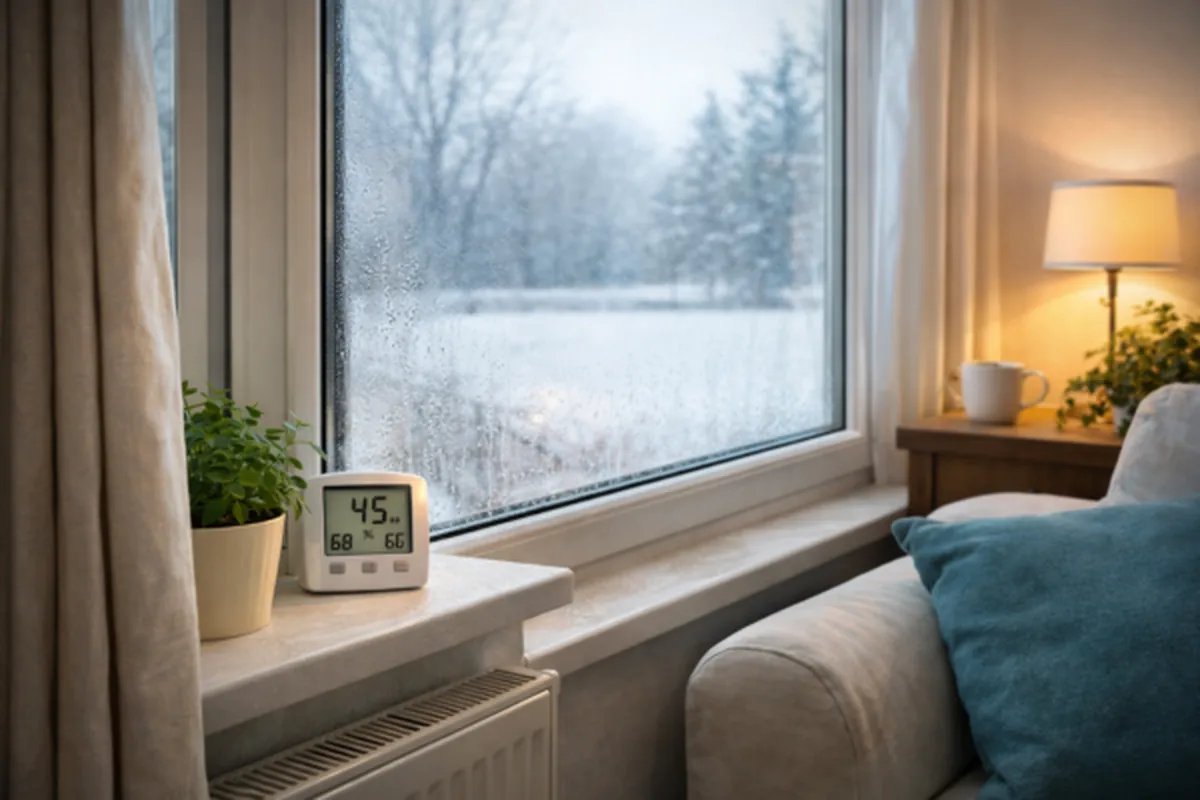
Winter humidity target levels help stop moisture settling on cold surfaces. However, many homes drift too high during cooking, bathing, and overnight use.
Why winter humidity target matters
Indoor air always holds some water vapor during winter. However, colder surfaces make that moisture condense much sooner. Windows, corners, and outside walls usually cool first. As a result, damp patches often appear before homeowners notice stale air.
A good humidity range lowers condensation risk without making rooms uncomfortable. Furthermore, balanced moisture supports better drying after showers and cooking. It also helps reduce mold risk on colder materials.
Warning signs
The first sign is often water on bedroom windows. However, that moisture usually reflects wider indoor conditions. You may also notice cooler, clammy rooms each morning.
Musty smells can follow repeated overnight condensation. Additionally, black spotting may appear behind wardrobes or curtains. Paint can blister on outside walls near corners. In contrast, leak damage often stays in one fixed area.
Main causes
Several everyday habits push indoor moisture upward during winter. For example, showers, boiling pans, and indoor laundry release heavy vapor. Closed windows and weaker airflow trap that moisture inside.
Cold surfaces make the problem worse very quickly. However, even normal humidity can condense on poorly insulated areas. Single glazing, thermal bridges, and unheated rooms increase risk.
Heating patterns also affect condensation more than many people expect. When rooms cool all day, surfaces lose warmth steadily. Then evening moisture meets those colder materials almost immediately. Because of this, short heating bursts often fail to prevent dampness.
Room use creates different moisture loads across the house. Additionally, bedrooms often collect humidity overnight from breathing. Bathrooms and kitchens spike after daily routines. Consequently, one room may struggle while another stays completely dry.
How to confirm the cause
Start by checking where moisture appears and when. First, compare mornings, evenings, and times after showers. Next, note whether marks dry partly by afternoon.
Use a hygrometer to check relative humidity and temperature. However, readings matter most when matched with colder surface conditions. A room can feel acceptable yet still condense easily. [internal link: how to measure indoor humidity accurately]
An infrared thermometer helps identify colder wall areas. For example, compare outside walls with internal partition surfaces. That simple check often reveals hidden cold spots. Moreover, repeating measurements helps confirm the same trouble areas.
First steps to take
Aim for steady moisture control before changing the building. First, run extractors during showers and cooking. Next, keep pan lids on and doors closed.
Keep some background heat in colder rooms overnight. However, avoid heating one room while others stay chilly. Steady warmth keeps surfaces safer from sudden condensation. As a result, window moisture often drops within several days.
Move furniture slightly away from outside walls when possible. Additionally, open curtains during daylight to warm glass. Wipe heavy morning condensation before it runs downward. [internal link: best dehumidifier placement for damp rooms]
When to call a professional
Call a professional when moisture persists after sensible changes. However, choose someone who checks both airflow and insulation. Repeated mold usually means the underlying balance remains wrong.
Get advice sooner for strong mold growth or health concerns. Additionally, seek help when staining appears around ceilings or electrics. Those patterns may point beyond normal winter condensation. In contrast, light window moisture is usually less urgent.
Prevention tips for winter humidity target
The best winter humidity target usually sits around forty to fifty percent. Therefore, many homes stay comfortable while avoiding frequent surface moisture. Lower levels can feel dry and uncomfortable. Higher levels often increase condensation on colder materials.
Daily routines make the biggest difference indoors. First, vent bathrooms well and keep lids on pans. Next, dry laundry with extraction or separate ventilation.
Insulation upgrades help when surfaces remain stubbornly cold. For example, loft insulation, better glazing, or reveal improvements can help. The goal is warmer internal surfaces, not simply hotter rooms. Consequently, the same humidity level becomes less likely to condense.
Symptoms table
This table helps match common winter signs with likely causes. However, use it alongside room patterns and simple measurements.
| Symptom | Likely Cause | How to Confirm | First Action |
|---|---|---|---|
| Water on bedroom windows | Overnight humidity meeting cold glass | Check mornings and afternoon drying | Ventilate mornings and keep gentle heat |
| Damp outside wall corner | Cold bridge plus trapped moisture | Compare surface temperatures nearby | Improve airflow and steady heating |
| Black mold behind furniture | Poor airflow on cold wall | Pull furniture forward and inspect | Create a gap and clean safely |
| Musty spare room smell | Cool room with stale humid air | Compare humidity with used rooms | Add background heat and ventilation |
| Peeling wallpaper near ceiling | Repeated condensation cycles | Note changes after showers or cooking | Reduce moisture and monitor conditions |
Tools and materials
A few basic items make winter checks easier at home. Additionally, they help confirm patterns before larger spending.
| Tool or Material | Purpose | Approximate Cost |
|---|---|---|
| Hygrometer | Measures room humidity and temperature | Low |
| Infrared thermometer | Finds colder wall and window surfaces | Low to moderate |
| Microfiber cloths | Wipes window moisture quickly | Low |
| Extractor fan timer | Extends ventilation after bathing | Low to moderate |
| Dehumidifier | Lowers indoor moisture during damp spells | Moderate to high |
Frequently asked questions about winter humidity target
These common questions explain how a winter humidity target works in real rooms. However, the right number only helps when cold surfaces and airflow are checked too.
What is the ideal indoor humidity in winter?
For most homes, a winter humidity target sits between forty and fifty percent. However, the safest point often depends on how cold your windows and outside walls become. In many cases, older homes with colder surfaces perform better closer to forty percent. Newer homes with better insulation may stay comfortable nearer fifty percent.
Why does condensation still happen at fifty percent?
A reading of fifty percent does not guarantee dry surfaces everywhere. Additionally, glass, corners, and thermal bridges can be much colder than the room air. When those surfaces drop near the dew point, moisture still forms overnight. As a result, you may see wet windows even when the humidity number looks reasonable.
Is thirty percent humidity safer in winter?
Lower humidity usually reduces condensation risk quite quickly. However, thirty percent can feel too dry for many people during long cold spells. Dry air may make bedrooms feel less comfortable and can increase dry throat or skin complaints. Therefore, most homeowners use thirty percent as a temporary low point, not a long-term winter humidity target.
Should every room have the same winter humidity target?
Not exactly, because each room produces and holds moisture differently. Bathrooms and kitchens usually have short humidity spikes after daily use. Bedrooms often collect moisture slowly overnight from breathing and closed doors. In contrast, spare rooms may stay cooler and show dampness because surfaces remain cold for longer. Because of this, the winter humidity target may be similar across the house, but each room needs slightly different control.
Does a dehumidifier replace ventilation in winter?
A dehumidifier helps lower moisture already inside the room. However, it does not remove stale air, smells, or moisture right at the source. Extractor fans are still needed in kitchens and bathrooms during daily routines. Therefore, the best approach combines source ventilation, steady heating, and a dehumidifier where needed.
Why does the same humidity feel fine in one room but not another?
The number on the hygrometer only tells part of the story. Additionally, surface temperature changes how that moisture behaves around the room. A well-insulated wall may stay dry at forty-eight percent humidity. Meanwhile, a colder window reveal may collect water at the same level. For that reason, a winter humidity target must always be judged alongside the coldest surfaces.
How often should I check my winter humidity target?
Check it at different times instead of once a day. First, look early in the morning when overnight moisture has built up. Next, check after showers, cooking, or indoor drying. Those readings show whether the home returns to its normal winter humidity target or stays too high for too long.
Winter humidity target levels work best when daily habits support them properly. However, the number alone will not solve condensation if the coldest surfaces remain too cold.
Start by measuring humidity in bedrooms, bathrooms, and the kitchen for several days. Next, compare those readings with visible moisture on windows, corners, and outside walls. Then improve extraction, steady heating, and airflow before making bigger changes. If condensation still returns, inspect insulation gaps, glazing quality, and possible thermal bridges.